A website has more to explain than what visitors see.
A prospective customer can read our website and understand what Marshal does. They can explore our services, meet our founder, and see who publishes our articles.
Search engines need to make sense of those same connections. Structured data gives them an explicit description of what a page contains: this is a business, this person is its founder, this article belongs to this publisher. We use a format called JSON-LD to put that information into the page’s code.
That description needs the same care as the words visitors read. It should reflect the page, use consistent business details, and remain accurate as the website changes.
We built Scar to handle that work on our own site.
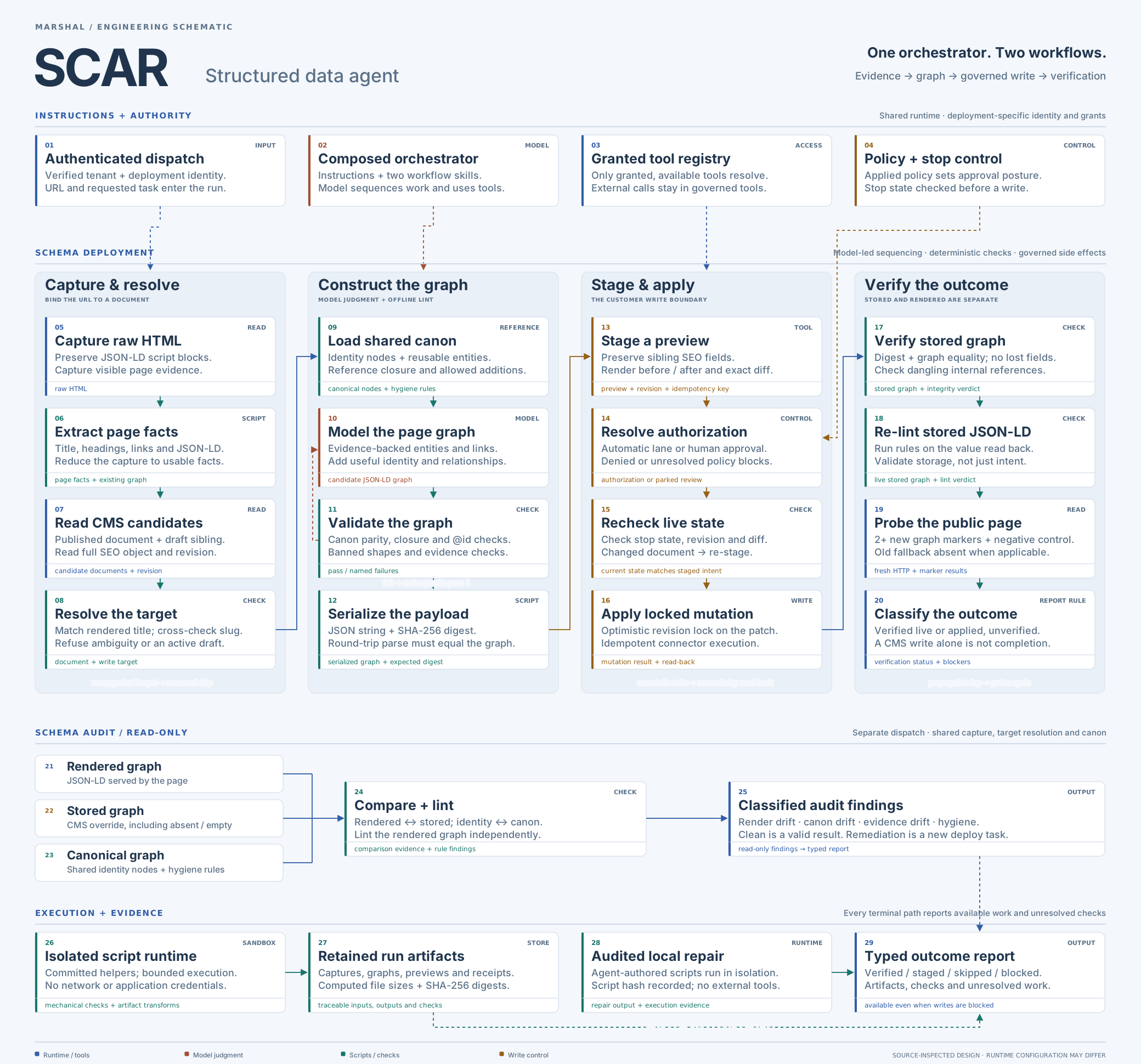
Scar starts with what the page actually says.
An assignment gives Scar a page to work on. It reads the published content and any structured data already present, then locates the matching record in our website’s content system.
From there, Scar builds a connected description of the page. On an article, that could mean identifying the author and publisher. On a profile, it could mean connecting the person to the organization they work for. Shared business details come from a common reference, so each page describes the same Marshal.
The information has to be supported by the content and approved references. Checks catch inconsistent identities, broken connections, and claims the evidence doesn’t support. If the proposed data fails, Scar revises it before proceeding.
The result is a description built around the page we have published. Its value comes from getting the facts and their relationships right.
Permission to work comes with boundaries.
Before changing anything, Scar prepares a preview showing exactly what it intends to update. The page’s other search settings are preserved.
Whether the update can proceed automatically or needs a person’s approval depends on the permissions in place. Scar checks those permissions and the current page record again before applying the change. If someone has edited the record in the meantime, it prepares a fresh preview. An active draft or an uncertain match stops it from guessing which version to change.
These details matter when an agent works alongside people. Our team should be able to edit the website without an earlier assignment overwriting newer work.
“Saved” is only part of the answer.
A content system can accept an update before the website serves it. Scar checks both.
First, it reads back the stored data and checks that the intended change survived intact. Then it visits the public page to look for evidence that the new data is being served.
If the update was saved but Scar cannot confirm it on the website, the report makes that distinction clear. We can see what was applied, what was verified, and what still needs attention. The page captures, proposed changes, and check results remain available for inspection.
That gives us a useful definition of finished: the change has reached the place where it needs to work.
It can inspect without changing anything.
Scar also has a separate audit workflow. When asked to audit a page, it compares what the website serves with what the content system stores and what our shared business reference says should be consistent.
It reports mismatches, outdated information, and structural problems. A clean result is useful, too. An audit makes no edits; fixing a finding requires a separate update task with its own authorization.
That lets us investigate a concern before deciding what to change.
A specialist job, with someone responsible for it.
Structured data is one part of helping search engines understand a website. It doesn’t promise a ranking or a recommendation. Scar’s responsibility is specific: prepare an accurate description, apply authorized changes, and check the result.
For a small team, this is the kind of work that still needs doing after a page looks finished. We gave it a defined process, clear limits, and an agent to carry it through. Marshal maintains that agent as the website and its systems change.
Your business will have its own version of this work: records to reconcile, information to publish, updates to confirm. Bring us a recurring job that deserves more attention than your team can keep giving it. We’ll work with you to define the outcome, build the agent, and run it for you.